Guide
Ice bath tubs in the UK: prices, chillers, water care and safety
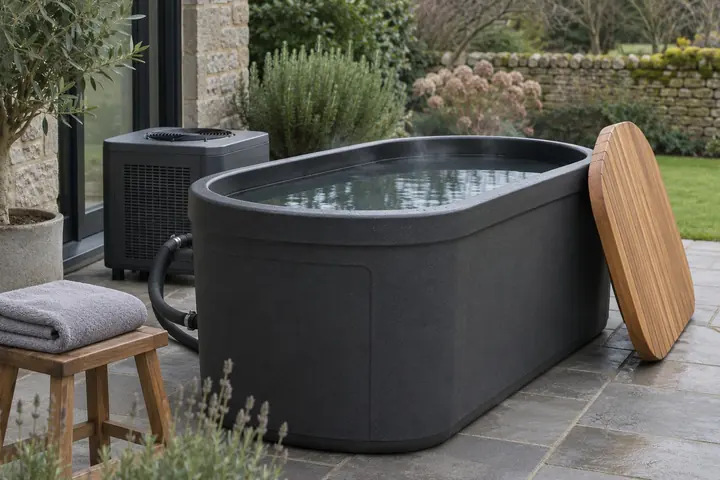
We don't sell ice bath tubs, and we haven't tested any of the products mentioned here. Prices were checked on retailers' websites on 6 November 2026 and change often. This guide is about buying and using a tub at home; for places to try one first, see our ice baths in London guide.
Types of ice bath tub and what they cost
| Type | How it works | Prices we saw |
|---|---|---|
| Basic portable or inflatable tub | You fill it with cold water and add ice. No power needed | From £69.99 to about £500 |
| Inflatable tub with a separate chiller | A pump and chiller loop cools the water; the chiller is usually sold on its own | Tub about £497; chiller extra |
| Hard-shell tub with built-in chiller | A rigid, insulated tub with a chiller that plugs into a 13A socket | £1,000 and over |
Some of the listings we checked:
- Outdoor Living Hot Tubs listed seven ice baths, from £199, with four at £1,000 or more. Its Chill Tubs Essential Pod was £499 and its IceTUB £299. The category page describes its inflatable tubs as needing no power and its hard-shell tubs as having an integrated chiller that runs from a 13A socket.
- Pro-Line Direct listed an 80 mm drop-stitch PVC inflatable tub at £497.40 in three sizes, from 135 × 80 × 65 cm to 170 × 80 × 65 cm. A chiller pump rated 0.6 to 1.0 Hp, with a 3 to 42°C range, was sold separately. Every size was showing as sold out.
- Costco UK listed a Lay-Z-Spa Arctic Plunge ice bath at £184.99.
- RecoverFit listed a 1.5 × 0.8 × 0.6 m inflatable tub with a chiller with built-in UV and particulate filters, at €1,063.95 to €3,757.95. Its page is inconsistent about whether the chiller is included, so check before you order.
- Posh, a UK lifestyle site, rounded up tubs under £100, including a £69.99 portable one. The page carries Amazon affiliate links.
Listings often leave out the details that matter. Several of the pages above don't give the capacity, the minimum water temperature or the power rating, so ask the seller or read the manual before you buy.
Do you need a chiller?
Without a chiller, you add ice to cold water and the tub warms back up as you use it. That works for an occasional dip, but you have to buy ice each time. A chiller keeps the water cold between uses, so you can step in whenever you like. The extra cost is the unit itself plus electricity.
We can't give you a running cost per tub, because most listings don't state the chiller's power. You can work it out yourself: multiply the chiller's power in kilowatts by the hours it runs and by your unit rate. At Ofgem's October to December 2026 price cap of 26.32p per kWh, every 100 W of chiller running for an hour costs about 2.6p. A chiller doesn't run flat out all the time, so check the rated power and think about how many hours a day it cools.
If the tub lives in the garden, the socket is part of the cost. Our garden sauna guide explains why new garden power installations are notifiable work for a registered electrician.
How much space and weight?
Pick a spot that suits the tub's footprint. The inflatable tubs we saw were about 1.4 to 1.7 metres long. Water weighs 1 kg per litre, so a 300-litre tub holds about 300 kg of water, and needs a flat, firm base. Pro-Line says the water fills two-thirds of its tub's volume, and the tub holds less than its full size suggests. Check the water capacity, not just the outside measurements, and whether you can sit with your shoulders under.
Keeping the water clean
Clean water matters more than most people expect, because the water can sit in the tub for days. Happy Hot Tubs, a UK hot tub retailer, advises:
- With a chiller and filtration: keep the water for a maximum of 4 months.
- With no filtration, if you keep the water between uses: no longer than 1 week.
- If you drain after each use: little to no water balancing is needed, but wipe the tub down now and then.
- If you use a sanitiser: it recommends keeping pH between 7.2 and 7.6, and says granules are better than tablets because tablets can take days to dissolve in cold water.
That's one retailer's advice, not a standard, so follow the manual for your tub. Check which chemicals are safe for your tub's material before you use any. Water left standing without filtration or sanitiser is the setup to avoid.
Using a home ice bath safely
Researchers at the University of Portsmouth and Surf Life Saving GB set out the risks in Cold water therapies: minimising risks (Tipton and colleagues). Their points that apply at home:
- Cold shock is real. It peaks in water between 10 and 15°C, and is strongest in the first 30 seconds. The Met Office says the initial effects typically last around 90 seconds, and can affect anyone, whatever their fitness. A sudden gasp and fast breathing are normal. Get in slowly and let your breathing settle.
- Keep it short. In colder water, the authors advise keeping immersions under 10 minutes to avoid sudden incapacitation from muscle cooling. Don't judge your time by how cold you feel, especially once you're used to it.
- Don't put your face in until the cold shock has settled, and avoid prolonged breath-holding.
- Get checked if you have a health condition. They list heart and breathing problems, circulation problems such as Raynaud's, and cold urticaria, and say medications, alcohol and drugs can change how you react. Avoid or cut back when you're ill or exhausted.
- Don't do it alone. Their advice for open water is a trained safety observer and an agreed emergency signal. That advice is for open water, but at home we'd still tell someone you're in and keep a phone within reach.
The same cautions as for saunas apply. If you're pregnant or have a heart condition, ask your GP first. Our sauna health questions cover the basics, and our guide to how long to stay in a sauna, ice bath or cold plunge explains rounds and rest.
Is a home tub worth it?
It depends on how often you'd use it. 56 of the London saunas we track have a cold plunge or ice bath, and the cheapest way to use one is a community or social sauna session, from £9, with the plunge included. A tub that costs several hundred pounds pays off only if you'd really use it every week, and a chiller adds to that. Many people try a few sessions first at a sauna with a cold plunge before they buy.
Sources
- Tipton M, Massey H, Mayhew A, Morgan P. Cold water therapies: minimising risks. University of Portsmouth and Surf Life Saving GB.
- Met Office: cold water shock and how to stay safe
- Happy Hot Tubs: how to keep your ice bath or cold plunge clean, 27 February 2025
- Ofgem: energy price cap, 1 October to 31 December 2026
- Retailer prices, checked 6 November 2026: Outdoor Living Hot Tubs, Pro-Line Direct, Costco UK, RecoverFit, Posh
Venue details in this guide come from the 167 London saunas we track and update automatically when a listing changes. How we check listings. Spotted something wrong? Tell us.